













Natural History Museum of Crete: When Darwin Met Deinotherium
Author Katerina Mylona
Culture
Culture

Latest news
- Strategic Cooperation Between OLH S.A. and DAHK S.A. to Strengthen Heraklion’s Connectivity and International Position
- Warning: Dangerous Weather Conditions in Crete
- International Crete Half Marathon in Arkalochori
- Konstantinos Perakis’ Painting Exhibition “The Other Side of Silence” Opens
- 2nd Autumn Choral Gathering with the “Maestrines” of Rethymno
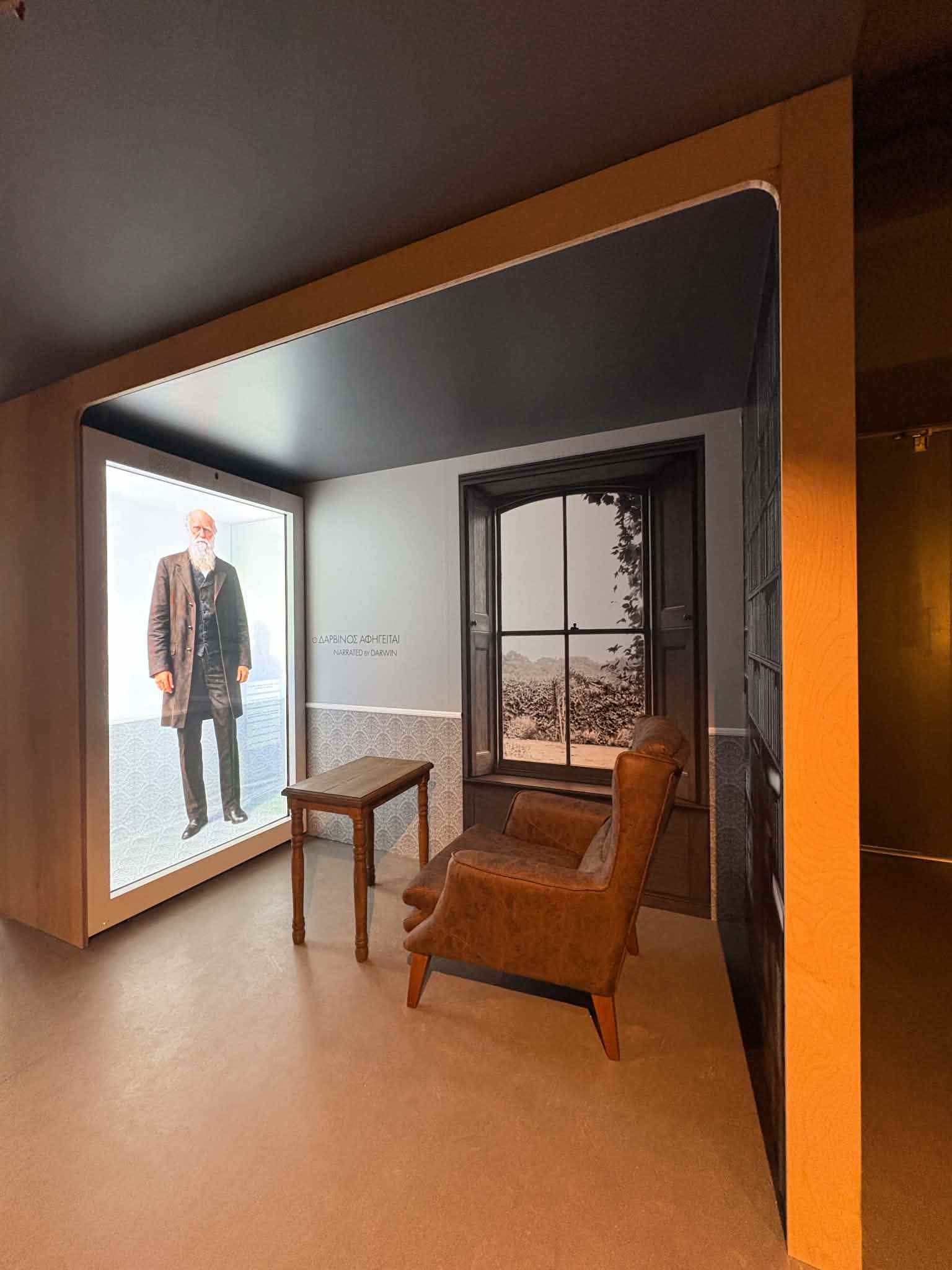
Do you have questions about the Theory of Evolution? Who better to answer them than Charles Darwin himself?
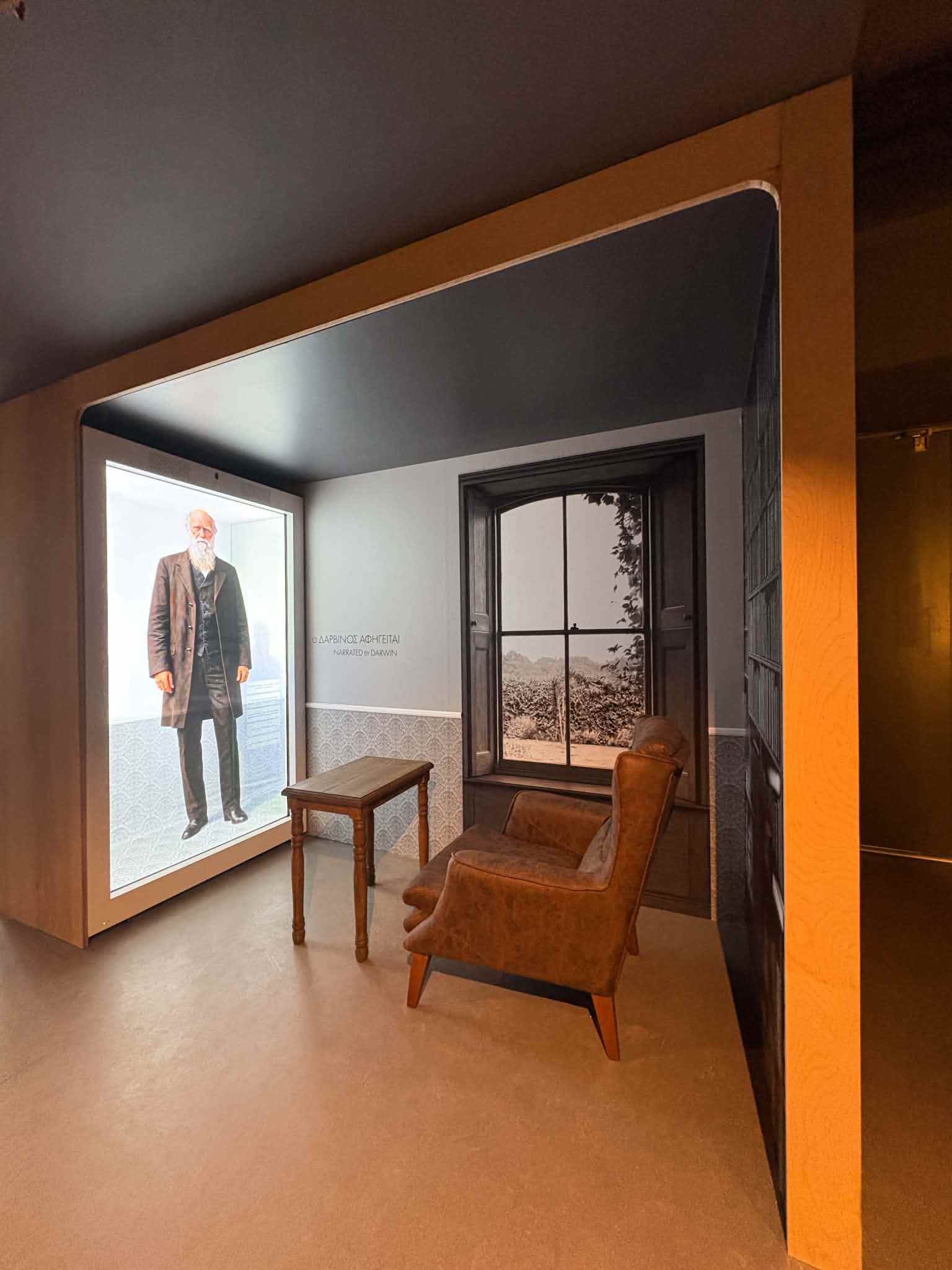
At the renewed Natural History Museum of Crete (NHMC), visitors have the opportunity to speak with a hologram of Darwin and ask him questions about the evolution of species and natural selection.
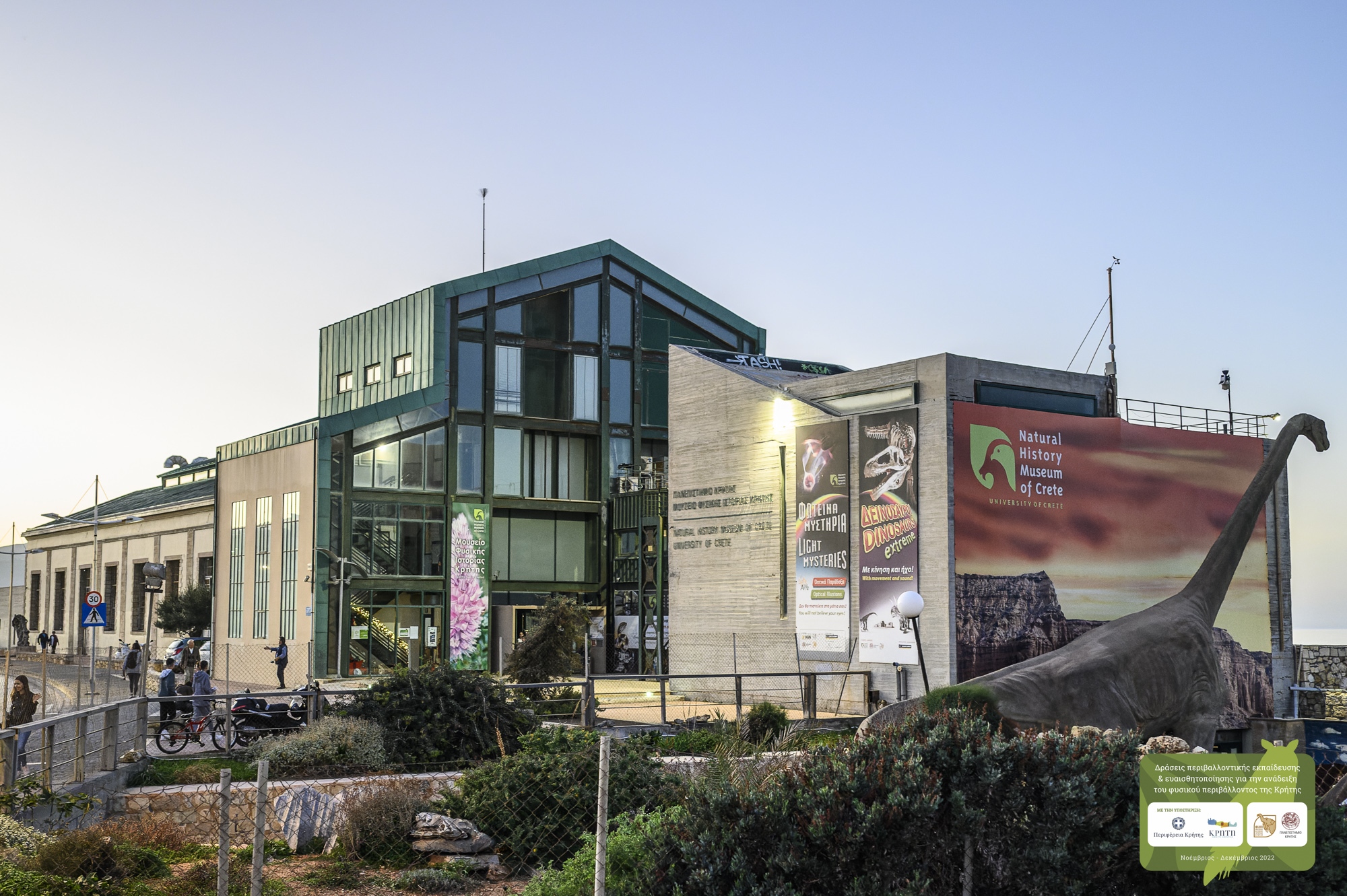
This is one of the unique experiences now offered by the NHMC, where the renovation of the interior spaces was recently completed, while the building's energy upgrade is also in its final stages.
The visitor is not simply a spectator. They actively participate in their journey through the museum and discover the natural world through original interactive applications and new exhibits.
The new exhibitions include the sections "The Evolution of Life", "The Study of Migration", "Fossils of Crete and the Mediterranean", "Mountain and Cave of Crete", "From Tethys to Modern Crete", "Spherical Projection System" and "Cretan Nature and the Minoans".
The museum's director, Professor Nikos Poulakakis, tells Discovercrete that this is a different, modern, experiential and interactive museum. The new exhibits are already available to the public and, as he notes, visitors leave the NHMC enthusiastic about their experience.
The project was funded through the Recovery Fund.
In the exhibition "The Evolution of Life"
Visitors discover the adaptations of plants and animals to Mediterranean ecosystems and the Mediterranean climate, while through the hologram Charles Darwin himself answers questions about the evolution of species and natural selection as the mechanism that favoured traits important for the survival of organisms.
At the same time, the exhibition presents the journey of humankind over the last 200,000 to 300,000 years, as well as the broader phylogenetic tree that begins with the first human ancestors in Africa 6 to 7 million years ago.
Through reconstructions of earlier human species, visitors encounter Homo heidelbergensis, the Neanderthals and modern humans, while learning about the relationships between them and the genetic traces that remain in modern populations today.
With images, models and interactive applications, the exhibition also presents the differences in brain size between different organisms and how these relate to evolutionary adaptations.
Games, activities and earthquakes
The museum also offers games and activities for visitors of all ages. Through interactive screens, visitors can transform into an Australopithecus or Homo erectus, create their own mountains and volcanoes and watch how these change over time.
At the new and larger "Enceladus" seismic table, visitors can experience earthquakes ranging from 5 to 7.6 on the Richter scale, gaining a better understanding of the phenomenon and learning how to respond safely.
A journey through the natural environment of Crete
The journey continues with a trip through time and the natural environment of Crete. Visitors "climb" a Cretan mountain and explore the cave located at its foothills. They observe different rock layers, see stalactites and stalagmites, cross a gorge and enter a natural wetland.
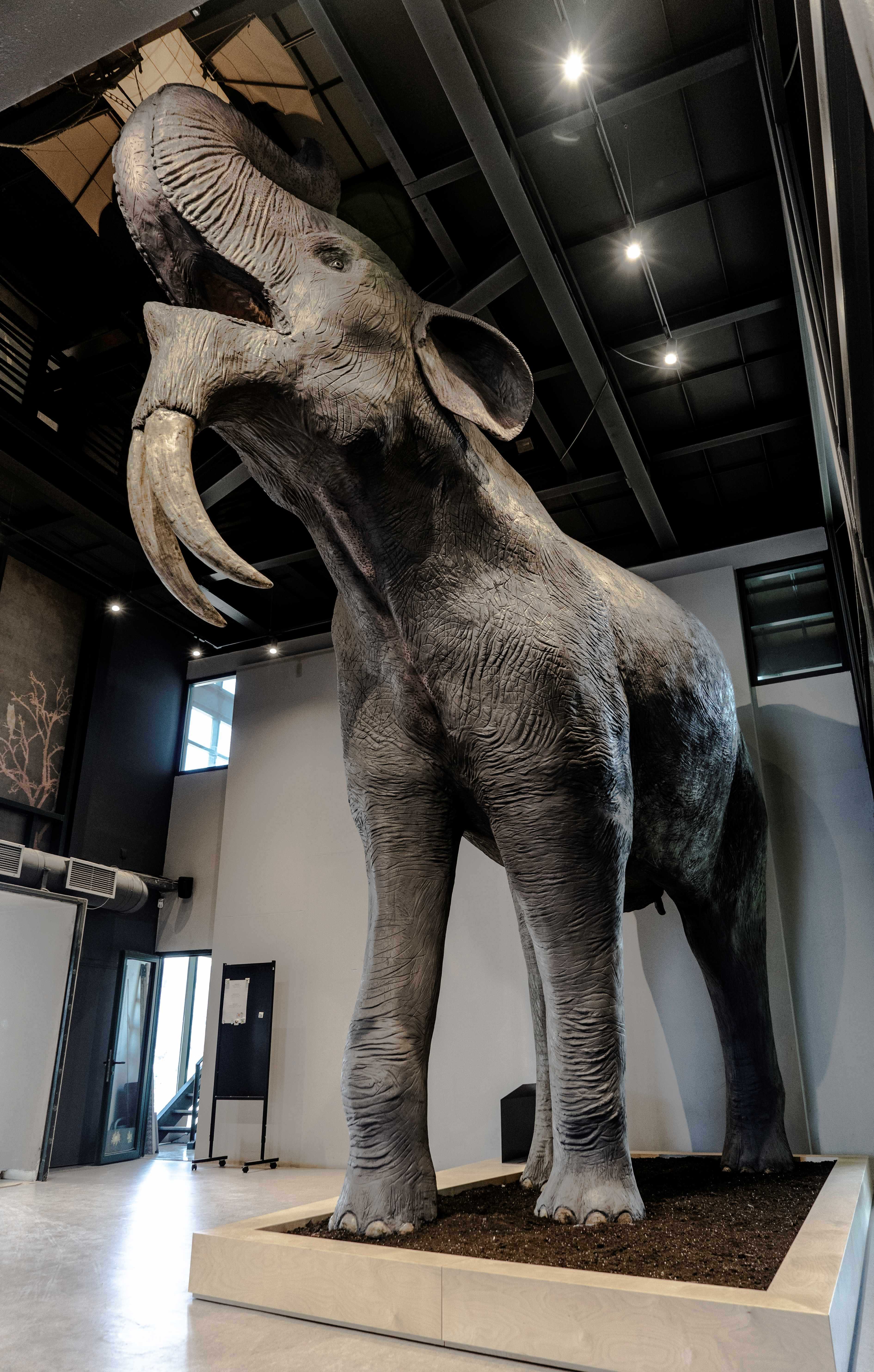
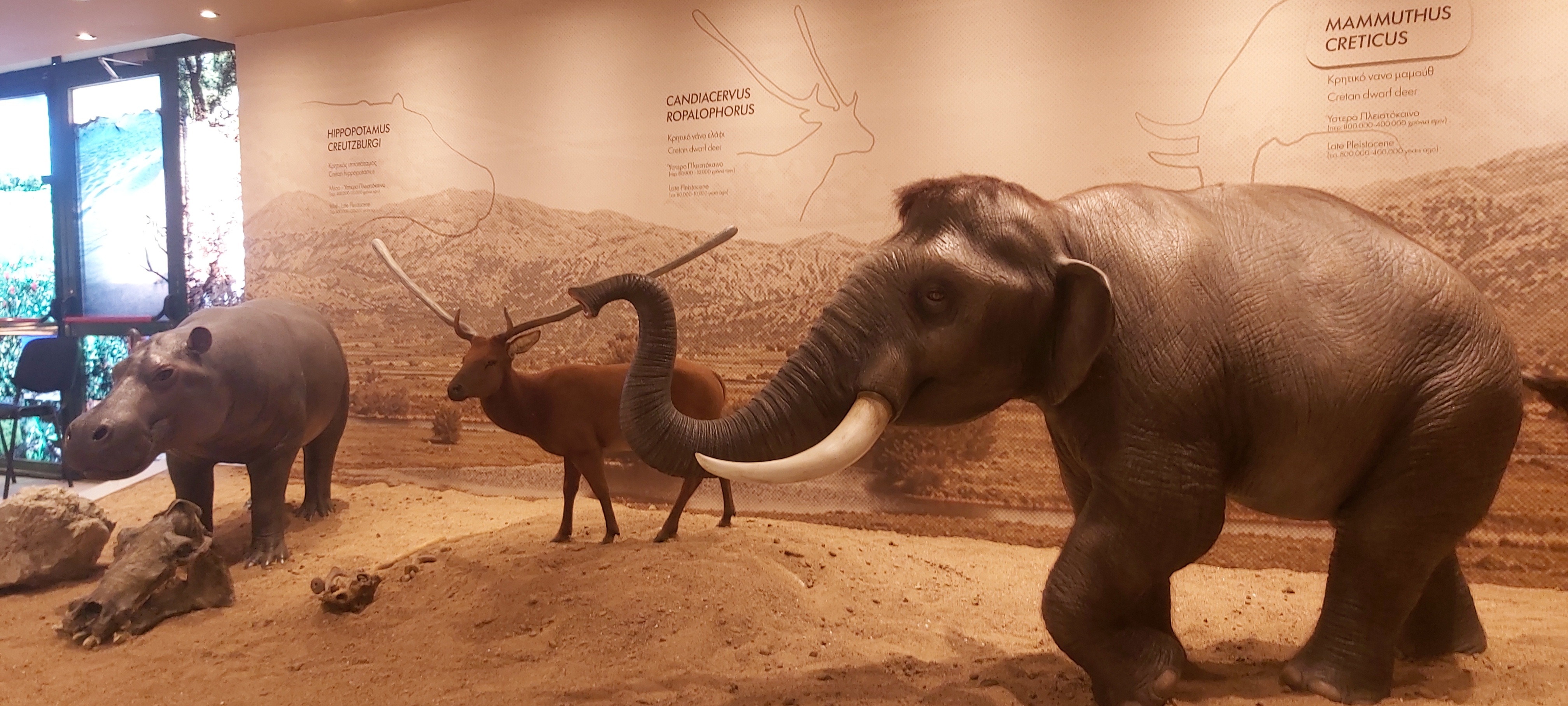
A special place is reserved for palaeontology, with fossils that tell the story of Crete over the last ten million years. Visitors can admire the life-sized model of the Deinotherium, discover the Sirenian and meet the island's prehistoric dwarf animals.
At the same time, they follow the migration of birds, travel from the ancient Tethys Sea to modern Crete and discover the natural world of the Minoan era.
For younger visitors
For younger visitors, the highlight is the Research Area (Erevnotopos), a specially designed space for children and one of only a few of its kind in Greece, where knowledge becomes play and learning becomes an experiential adventure full of discoveries.
The surprises continue in the museum's Botanical Garden, where the "Dinosaurs Extreme" await young and old alike for an exciting experience.
The Natural History Museum of Crete is open on weekdays from 09:00 to 17:00 and on weekends from 10:00 to 18:00.



Related news