


















Wine: A Mystical Bond with Crete
Author Discover Crete
Gastronomy
Gastronomy

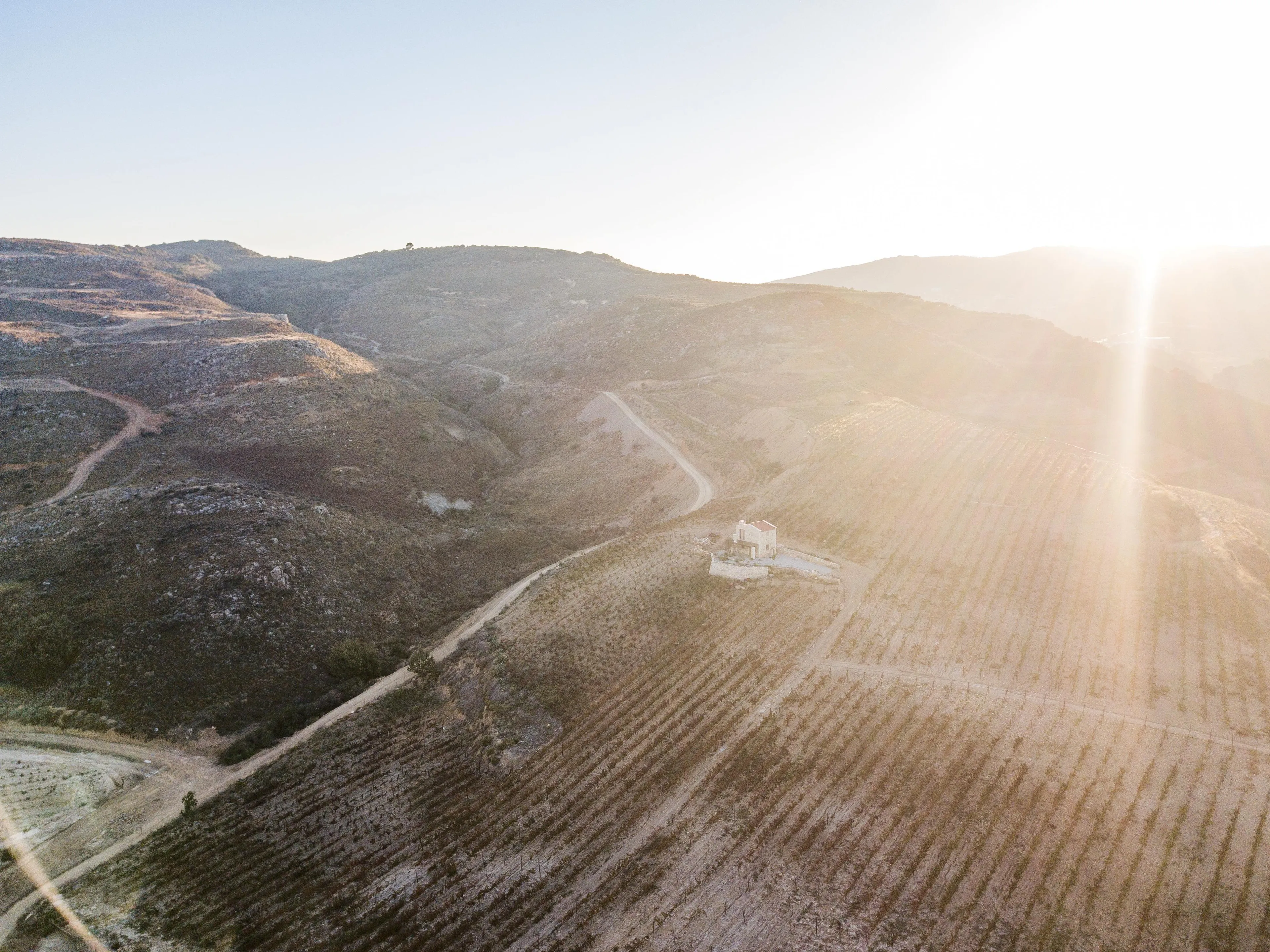
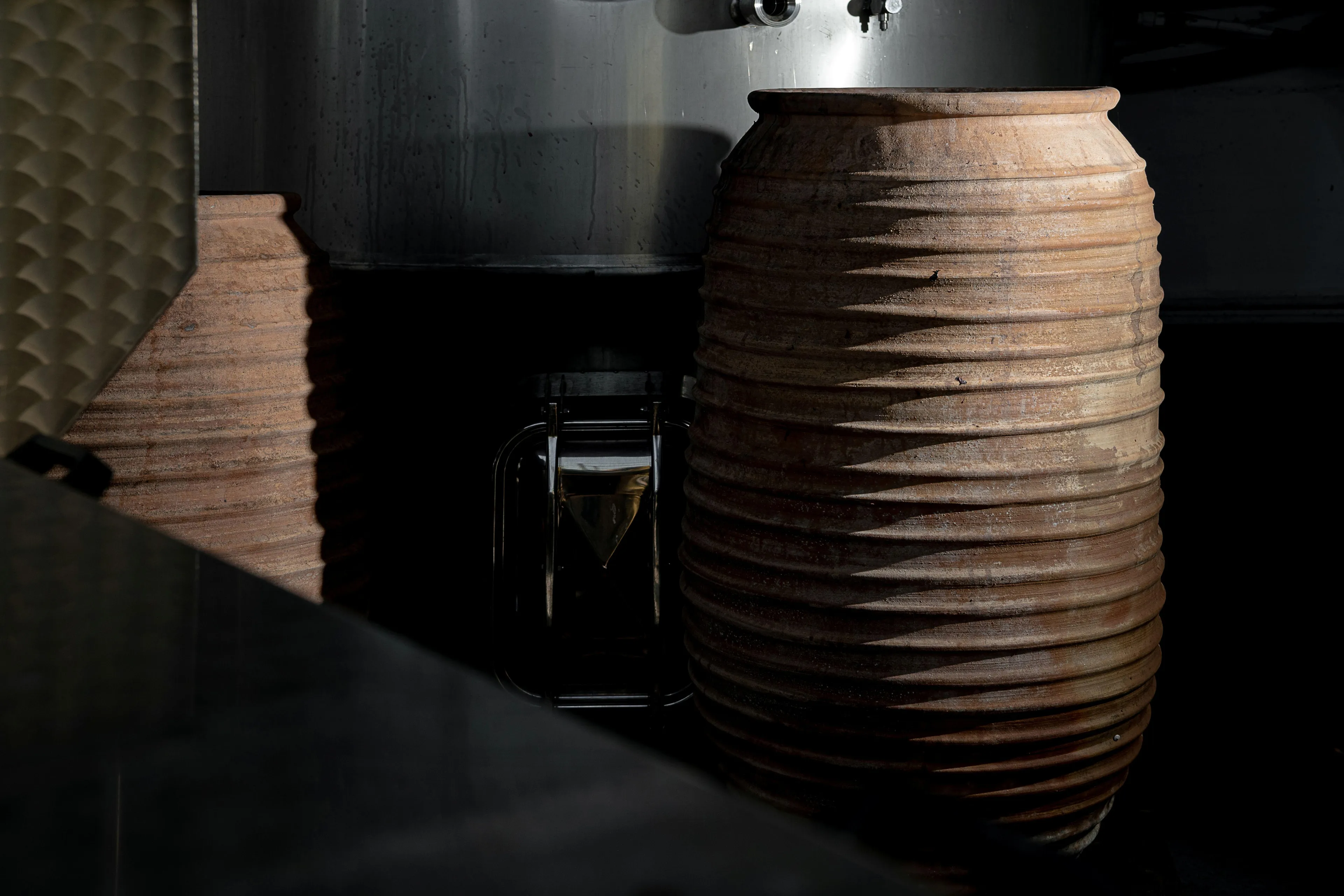
A clay amphora instantly captures attention when placed among the stainless-steel tanks of a modern winery, standing out with its raw, timeless character. About 1.5 meters tall, it is filled with red grapes that slowly ferment in their own must. If you lean in close, you can even hear the quiet bubbling of fermentation—a subtle reminder that the process is very much alive.
As Nikos explains, this is a near zero-intervention method, allowing the grape’s natural yeasts to take the lead. It echoes a much older era of winemaking, when grapes were crushed by foot, leaving some berries broken and others intact. This detail is crucial: fermentation continues inside the unbroken grapes, contributing significantly to the wine’s depth, rich flavor, and full-bodied character.


Such a method demands patience and care. The grapes must be handpicked and carefully sorted, a process that can take several days just to fill a single amphora. Once fermentation is complete, the must is pressed using a traditional hand-powered press—one that once belonged to Nikos’ grandfather—preserving both technique and heritage.
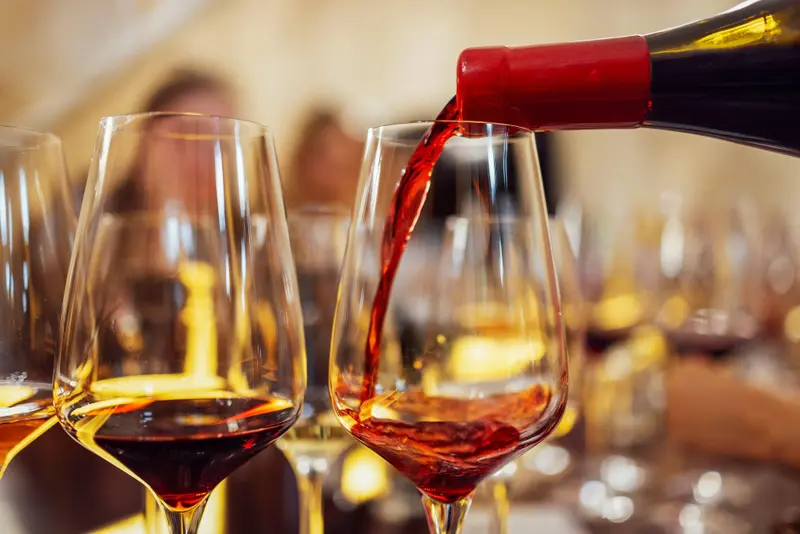
This approach reflects a broader philosophy: reviving traditional practices in a way that still aligns with modern winemaking. A similar effort is being made by a group of winemakers in Hania, who are working to preserve ancient vineyards of the native Romeiko variety, well-suited to western Crete. Historically used for home-produced wines, Romeiko—known for its mix of red and white grapes—is now benefiting from modern techniques that unlock its full potential, producing notable dry reds, whites, and sweet wines.
Yet beyond taste and technique, wine holds a deeper cultural role. At any Cretan table, no matter how abundant the dishes, wine remains the centerpiece—the true highlight and a proud expression of the host’s hospitality.
Source: “Handcrafted Crete”, Isabella Zambetaki, Region of Crete