





















Fasten Your Seatbelts: Cretalive Takes a First-Hand Look at the New Heraklion Airport (Video, Photos)
Author Ioannis Heliotis
News
News

Camera: Kostas Dimakis
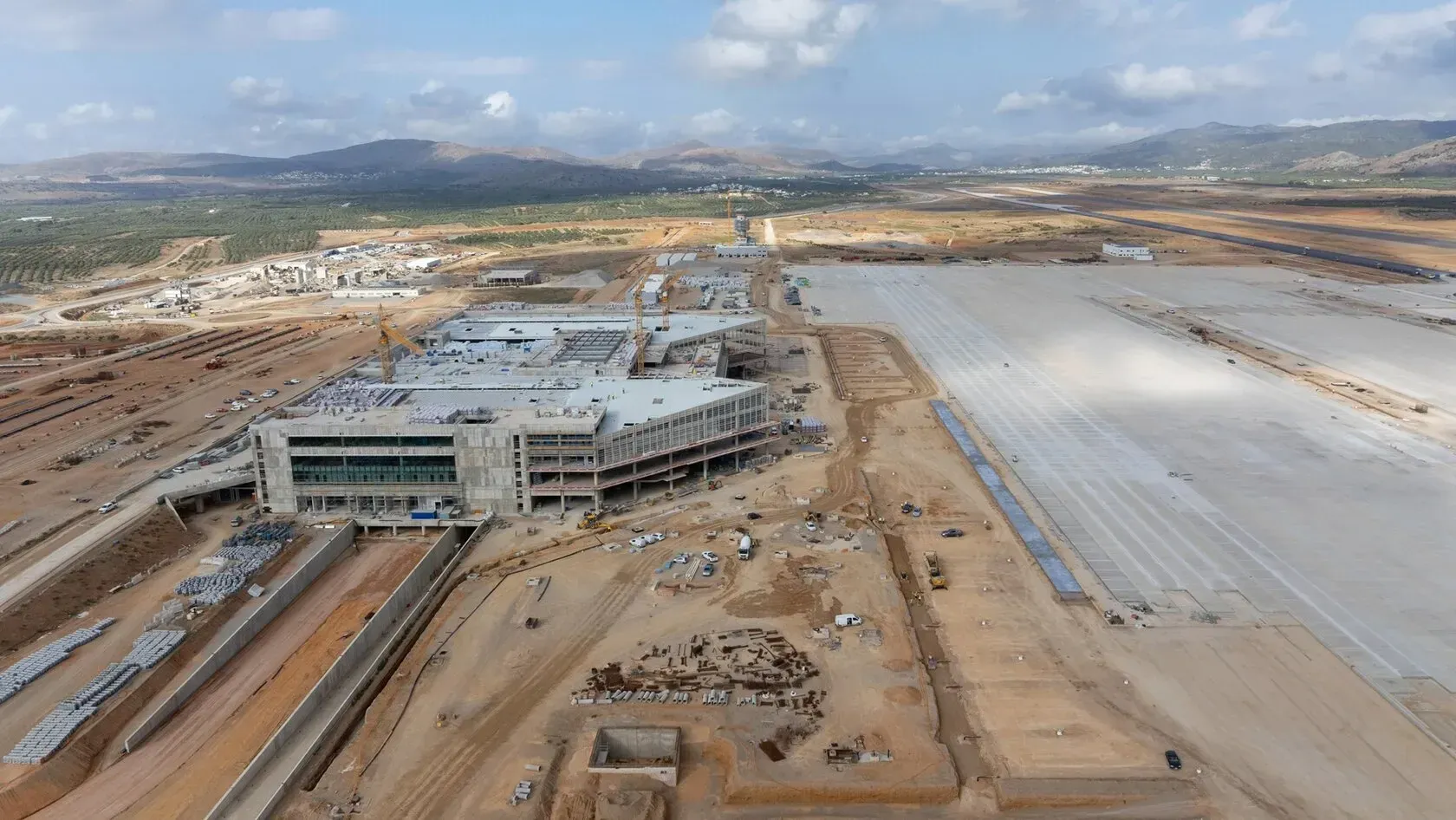
Around 30 kilometres southeast of Heraklion, between Kastelli Pediadas and Arkalohori, a colossal project is taking shape that is expected to radically transform Crete. The Heraklion International Airport of Crete (DAIK), currently under construction, will not simply be a state-of-the-art airport, but a new “gateway” connecting Crete with the wider world.
With the capacity to welcome more than 15 million visitors annually and connections to dozens of countries, the new airport is expected to become an aviation hub with international reach. A landmark project that will decisively strengthen Crete’s potential, boosting its international outlook, development and tourism prospects across the entire island.
Just a few months before trial operations begin, Cretalive toured the TERNA S.A. construction site, getting a first-hand look at the new airport’s facilities and the innovative technologies being introduced across its infrastructure: from CT scanners for screening suspicious packages, a fully digitalised baggage handling system and “smart” conveyor belts, to state-of-the-art data centres and biological treatment facilities. These technologies will make it one of the most modern airports in the Mediterranean.
The landmark project, being developed by Heraklion International Airport of Crete, whose shareholders are the Greek State (45.9%), GEK TERNA Group (32.46%) and the Indian GMR Group (21.64%), has now reached its most advanced stage and is progressing according to schedule.
Green Infrastructure and “Jumbo” Take-offs
According to officials from the GEK TERNA Group and the DAIK management, construction of the mega-project, which extends across 6,030 stremmas, is expected to be completed by summer 2026, in less than nine months, while all trial operations at the facility, from the first flights to security systems, are expected to have been carried out according to schedule within the first half of 2027. As highlighted, these will be preceded by independent system tests, as well as integration by TERNA.
According to information available to Cretalive, construction progress at the new airport exceeds 65% (as of 31/10), with several individual sections showing an even more advanced level of completion. Plans are also under way for the creation of a 400-stremma commercial development zone within the airport, which will include, among other things, the construction of a hotel.
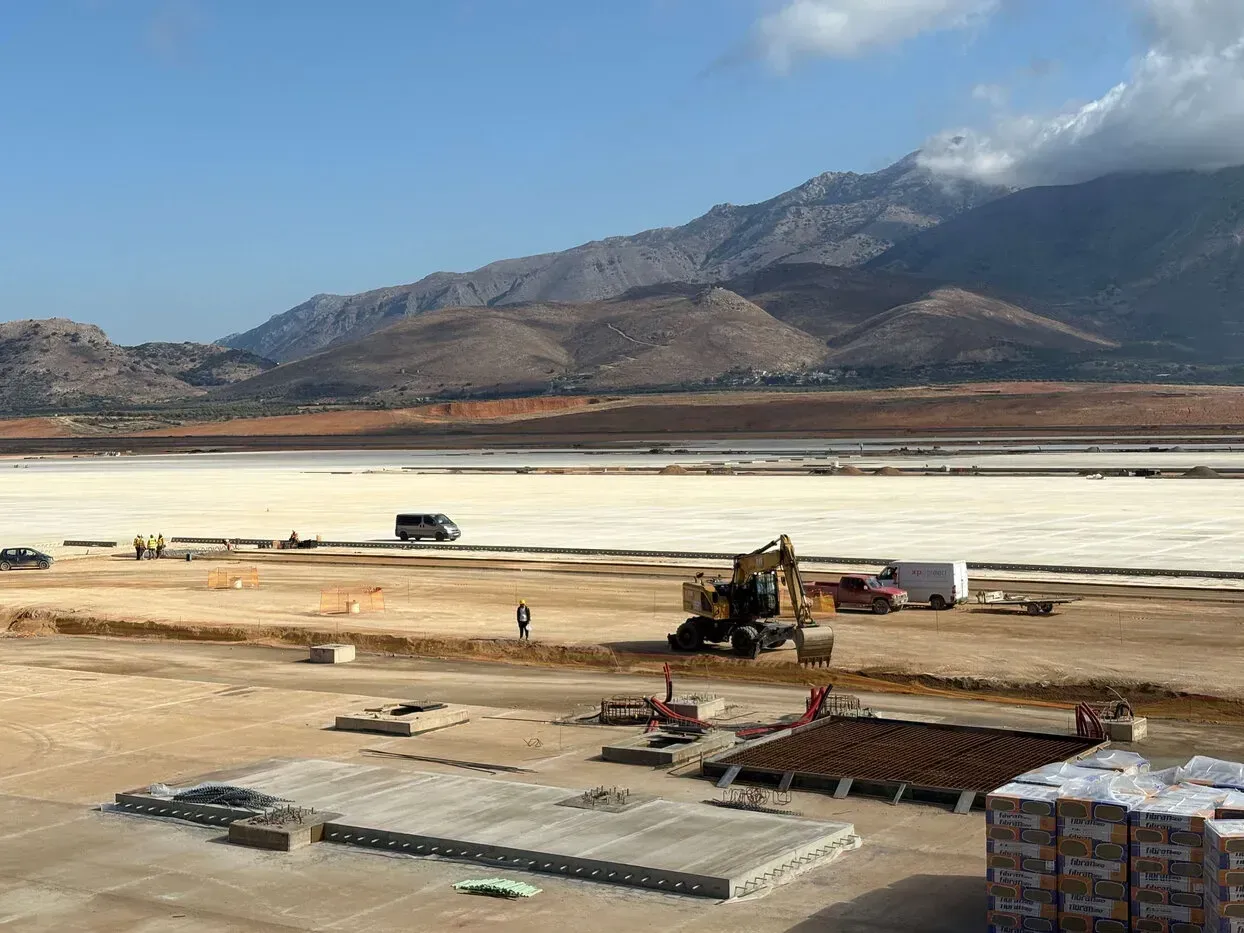
During the presentation on the progress of the works, TERNA CEO Christos Panagiotopoulos and TERNA Vice-President Vangelis Masouras stressed that the new airport at Kastelli is expected to become a key infrastructure project for Crete and the country as a whole. It will be the country’s second-largest airport in terms of passenger traffic, after Athens Airport, a picture that has already begun to emerge today with “Nikos Kazantzakis” Airport. Indicatively, according to Mr Pliakas, former Airport Manager of the existing airport, the year is expected to close with 10 million passengers at Nikos Kazantzakis. The new airport is expected to handle up to 11.5 million passengers in the coming years, while by the 30th year of the concession the number is expected to gradually increase to as many as 18 million passengers, figures that could even be exceeded.
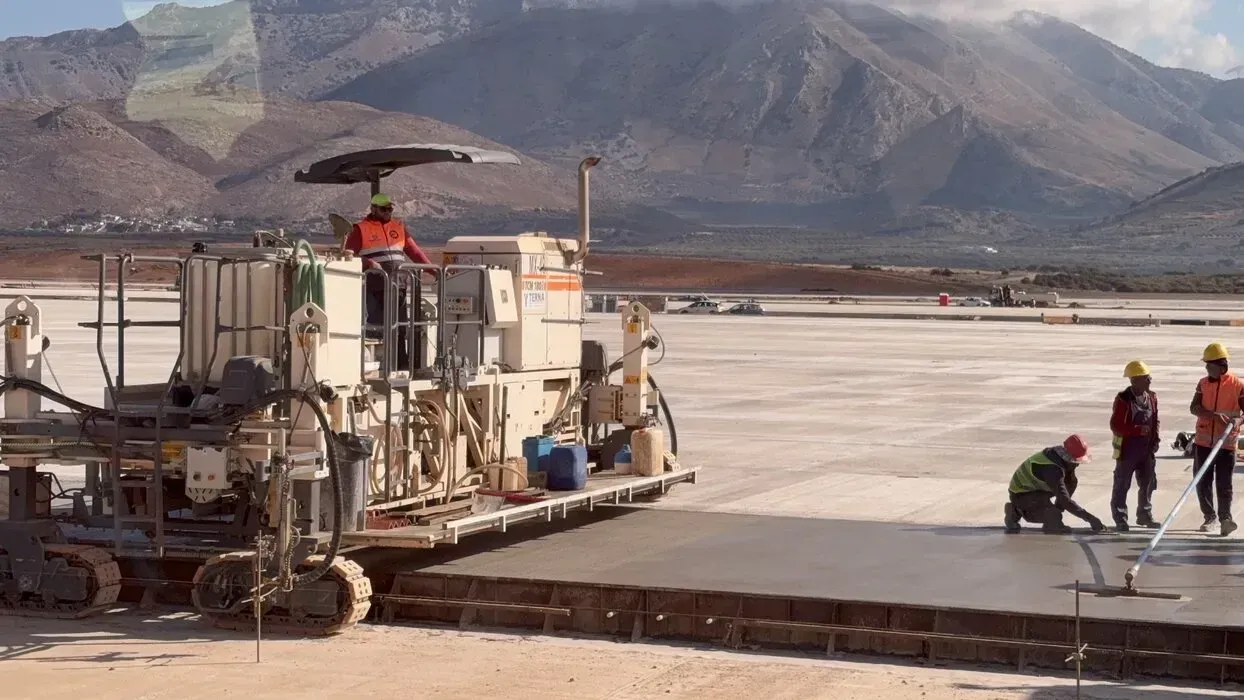
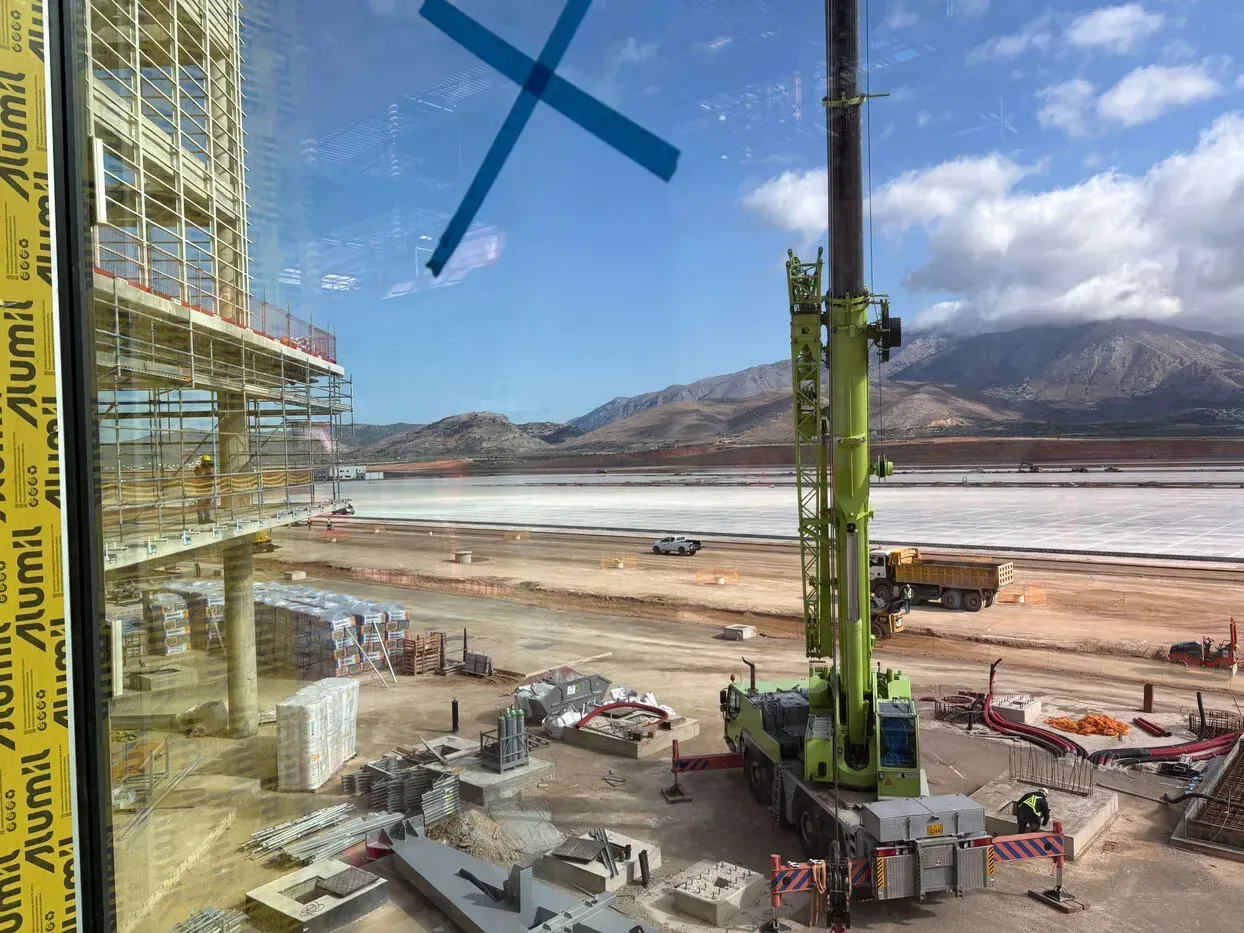
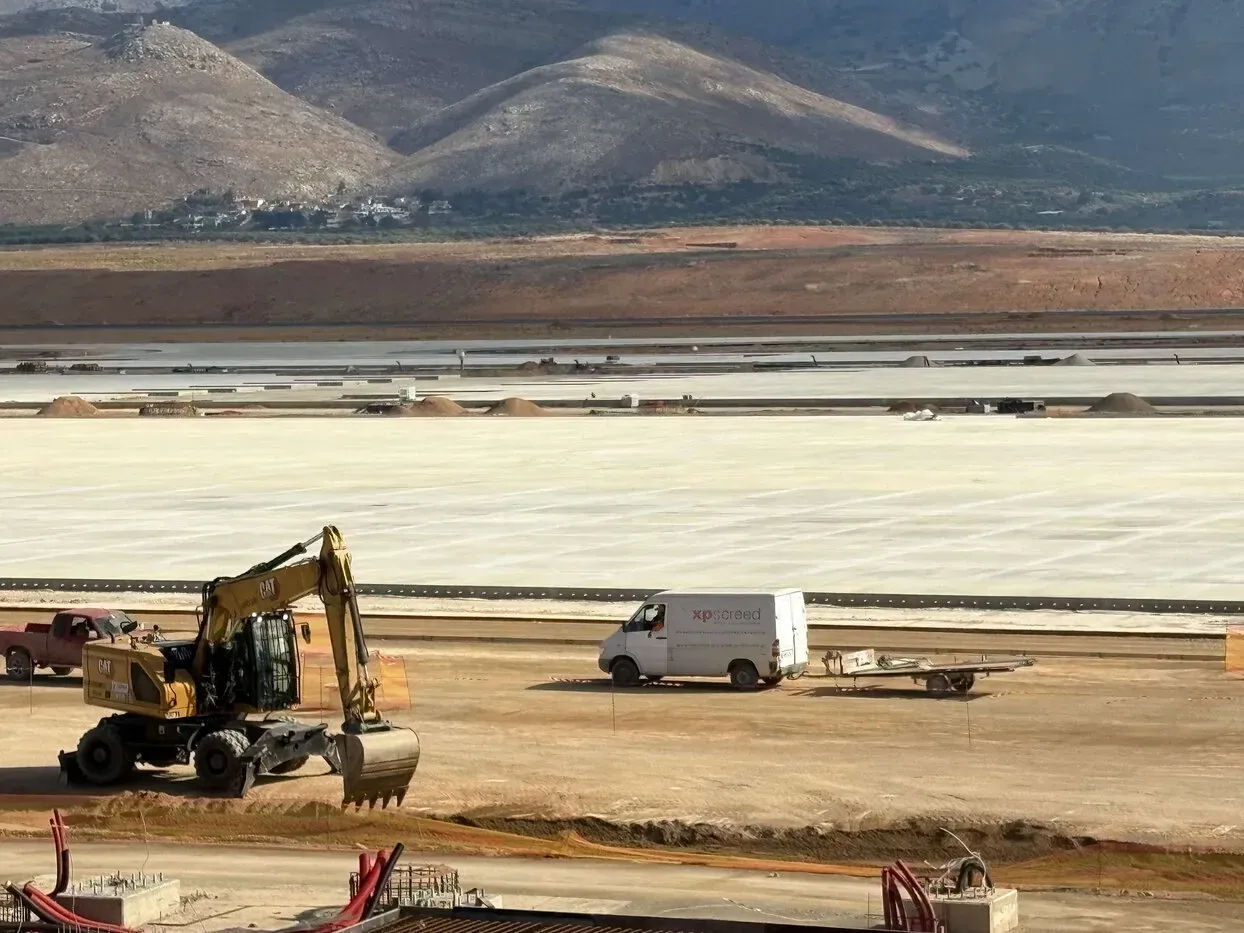
More specifically, the 3,200-metre runway (Apron) – with 3 kilometres being the minimum distance required for the take-off of “Jumbo” aircraft – is progressing satisfactorily and has now reached 96% completion. According to information, the work is expected to be completed within the next three weeks, after which special markings and lighting will be installed, as planned, for safety purposes.
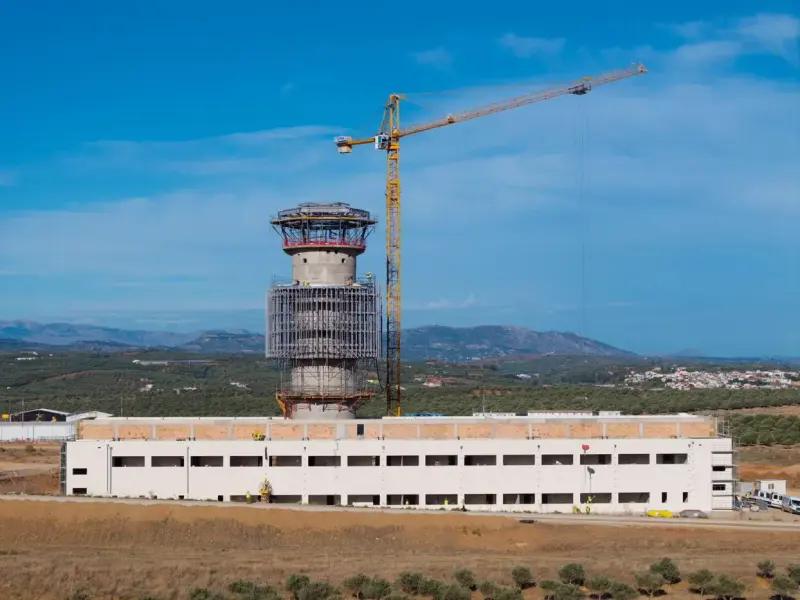
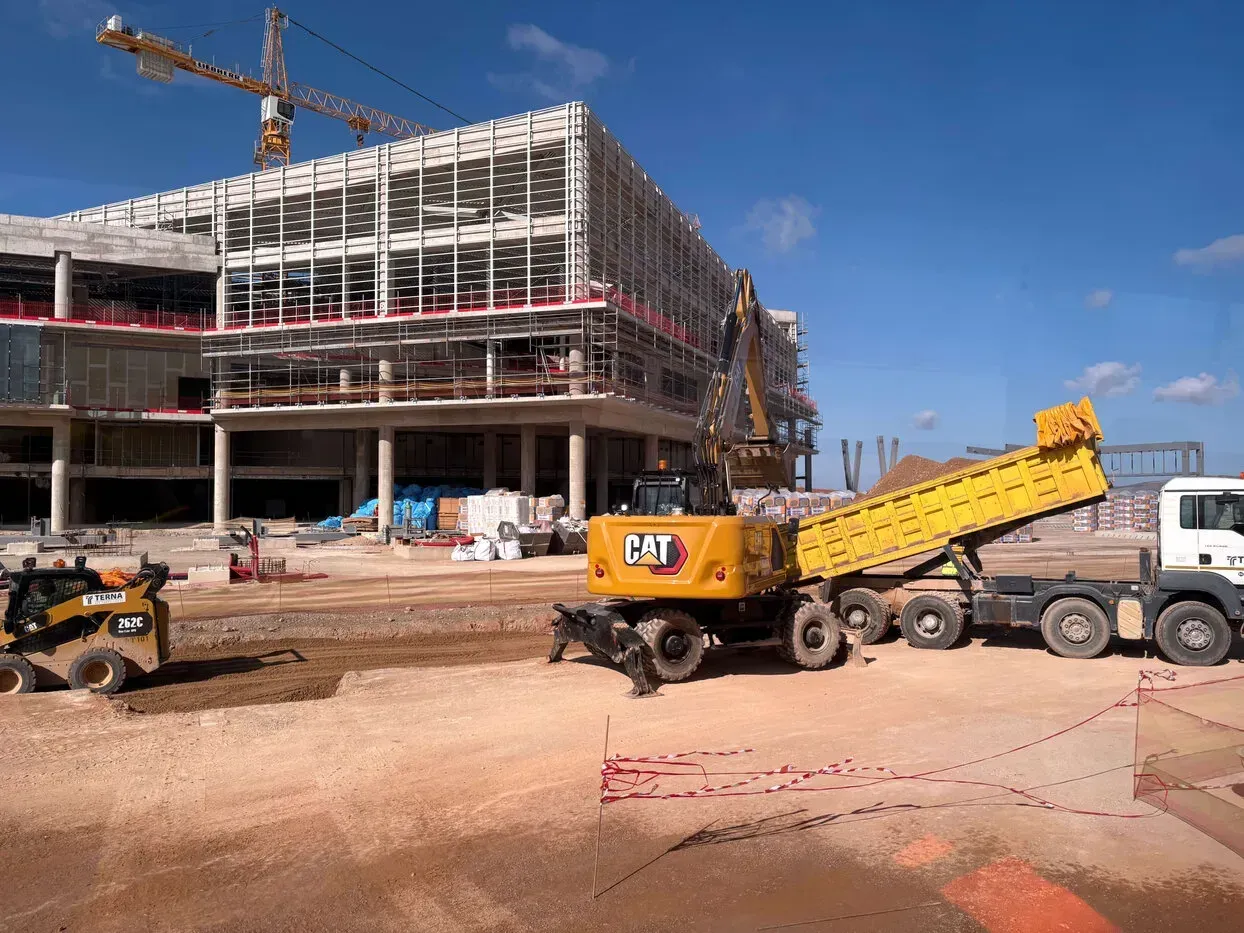
In the field of air navigation, the Control Tower, covering 4,850 sq. metres and standing 44 metres high, has entered the final stage of construction. According to the schedule, it is expected to be handed over to the Civil Aviation Authority in the spring so that the air navigation systems can be installed.
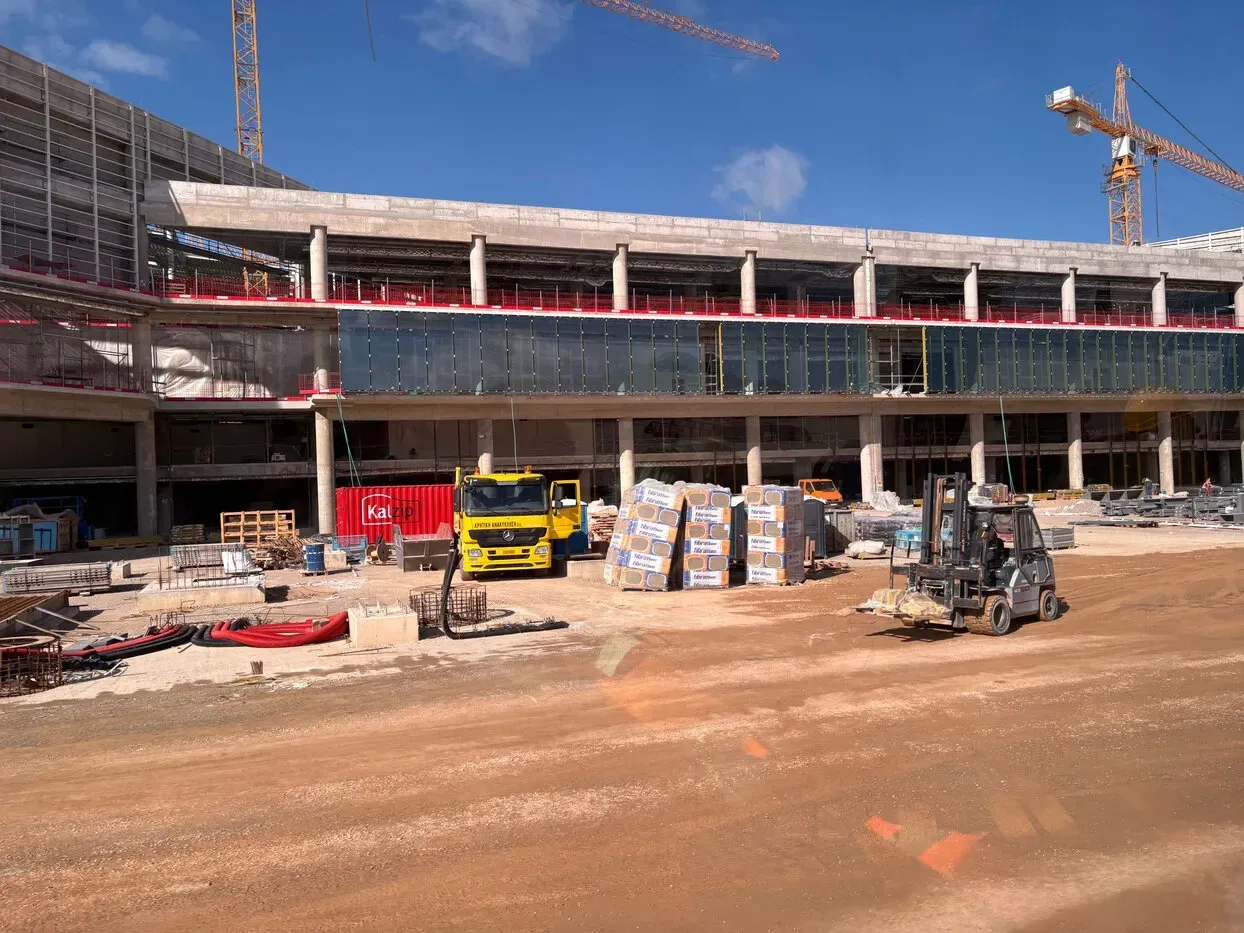
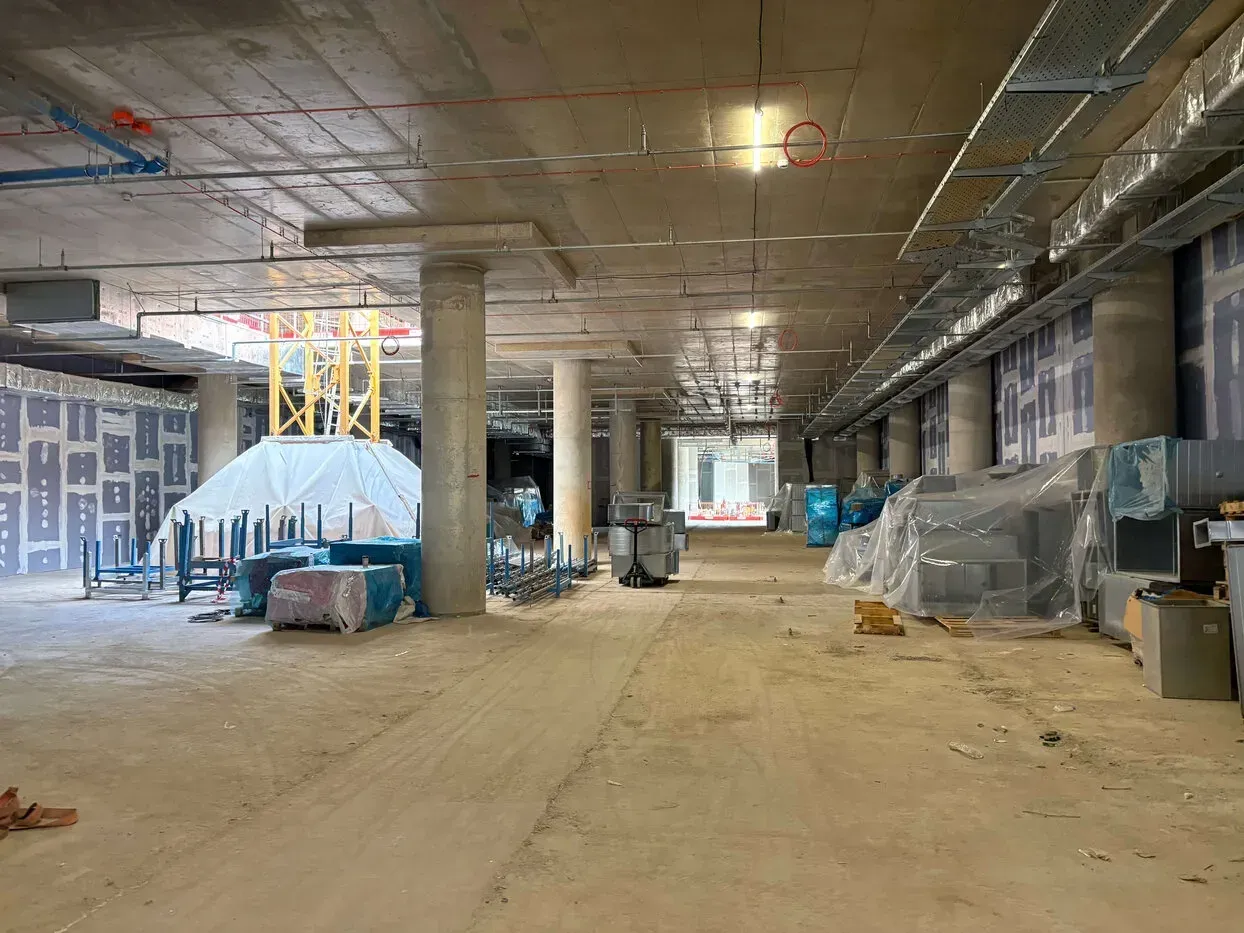
At the same time, the interior of the “core” of the new airport is also taking shape: the seven-level Terminal, with a total area of 93,000 sq. metres, is 60% complete. This is where the “smart” passenger, airline and commercial service operations will be housed.
The Challenge of the Transition
The challenge, however, according to Alexandros Noutsos, DAIK General Technical Director, is the transition from the existing airport to the new one – an “overnight transfer”, as highlighted, similar to what happened in 2001 with the move from Elliniko to “Eleftherios Venizelos”.
As the General Technical Director explains, this is a world first, a difficult undertaking that airport executives will be called upon to manage, since “Nikos Kazantzakis” will cease operations overnight and the new airport will immediately become operational.
Mr Alexandros Noutsos, DAIK General Technical Director | Photo: Cretalive.gr
In addition to the full coordination of all bodies involved, the transfer, which will take place during a period of lower visitor traffic, such as November or Q1, requires at least two years of preparation.
“The process of staff training, system testing and preparation for the complex operational requirements of the first period of operation has begun. Scenarios will be run during the operational trials; in other words, the operation of one flight will be simulated, followed by two and then three flights, with the help of students from Crete’s universities, Civil Aviation Authority personnel, customs, the police and, of course, airport staff, in accordance with the security-check planning and stress tests on individual systems,” Mr Noutsos explains.
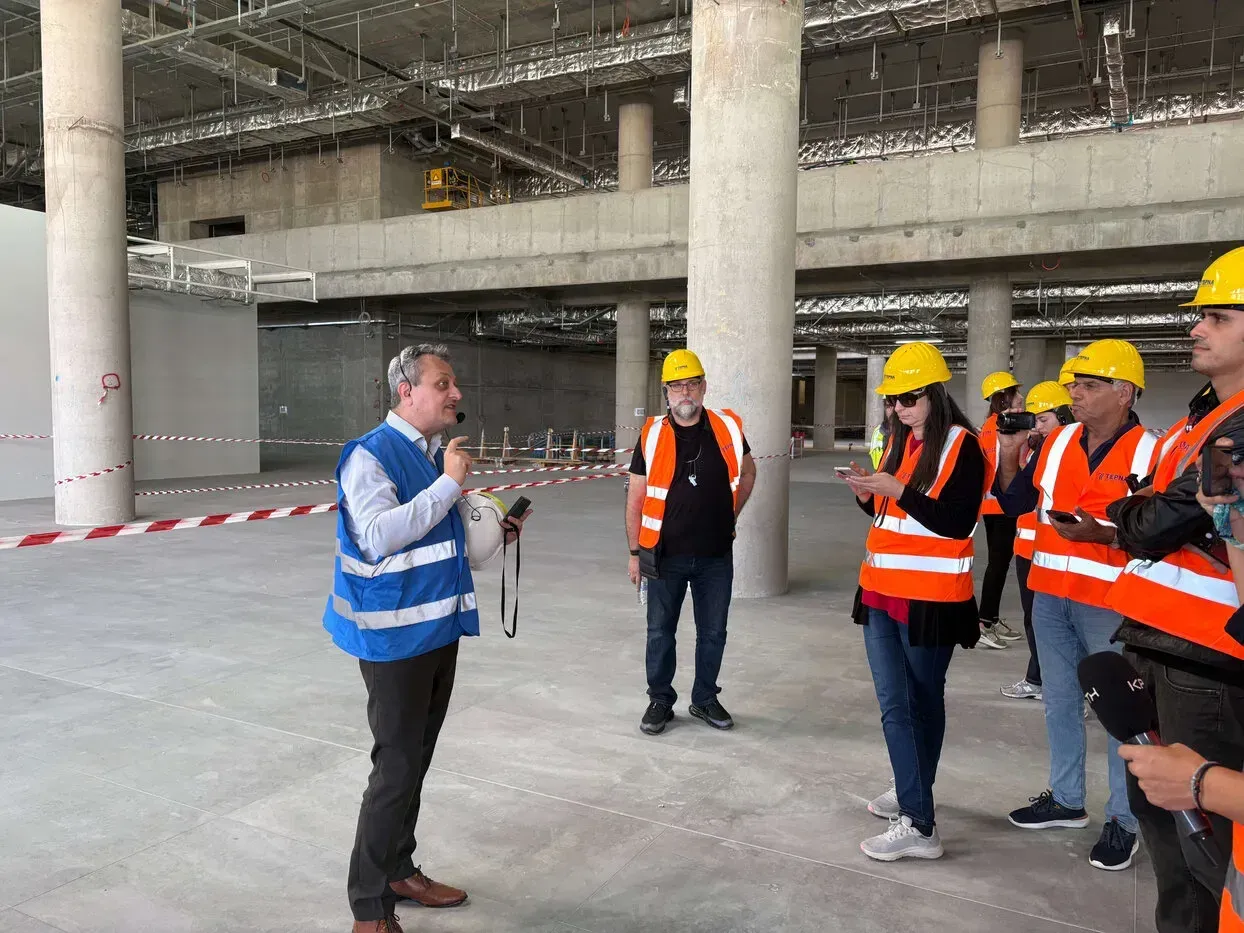
Mr Alexandros Noutsos, DAIK General Technical Director | Photo: Cretalive.gr
The Future at Kastelli
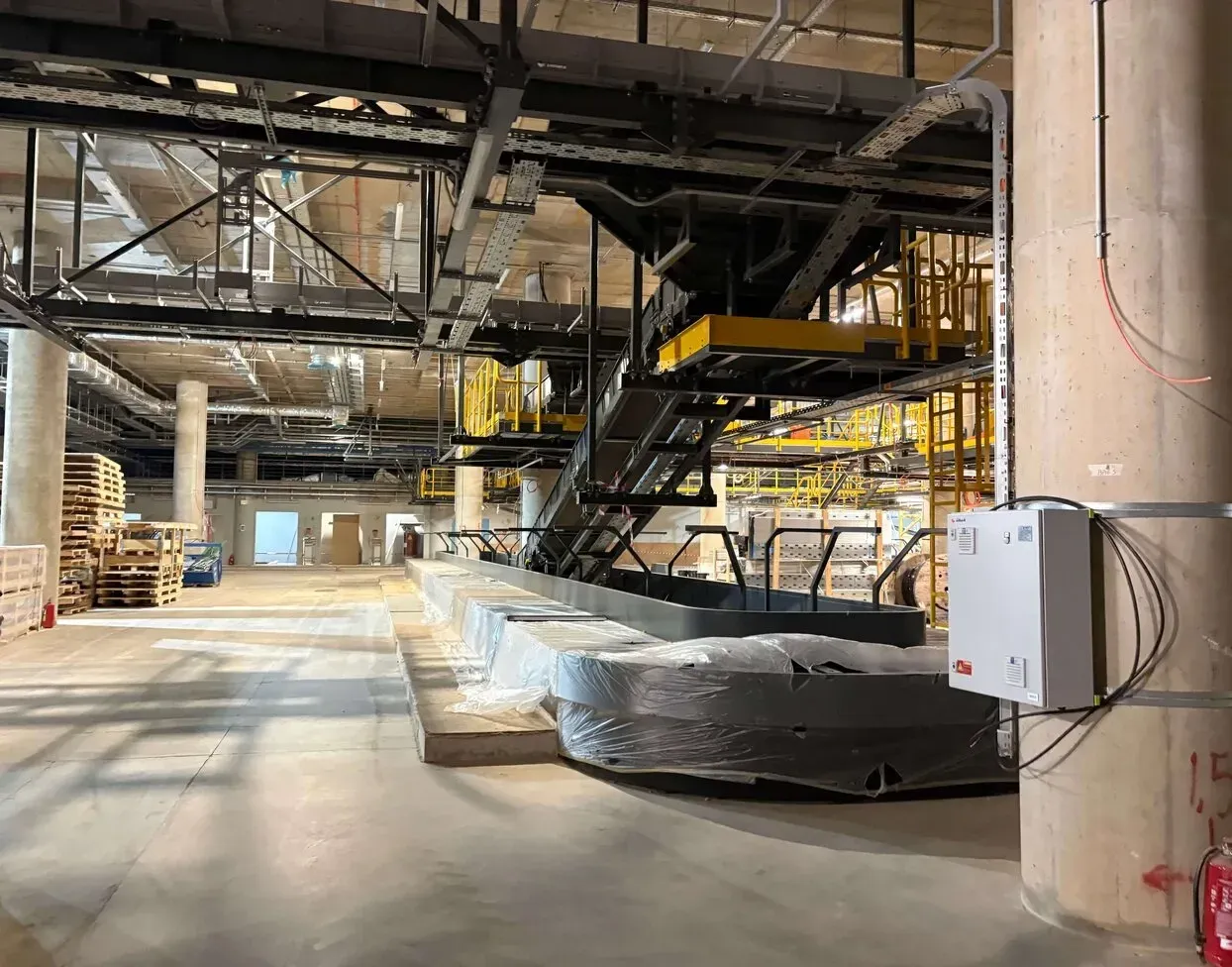
One of the most impressive systems is the baggage handling system, a complete “factory” featuring cutting-edge technology, capable of processing thousands of suitcases every day with full traceability, as DAIK engineers explained to us.
“The suitcase knows where it is at all times, and so does the staff. It is now extremely difficult for baggage to be lost, as it is monitored using the latest and most advanced technology available in aviation,” officials added.
New-technology screening machines will allow more passengers and baggage to be screened, resulting in better service.
The airport’s network follows the same approach. According to information obtained by cretalive.gr, all airport data, as well as that of the companies that will be based there, will communicate digitally under a huge protective “umbrella”.
For this purpose, the airport will operate two mega data centres, both equipped with advanced synchronisation (mirroring) services, creating a “mirror” of the data so that if one copy is destroyed or lost, the other retains all the data and remains immediately accessible.
Cretalive
Green Airport
Particular emphasis is also being placed on the sustainability of the new airport, with photovoltaic systems being installed across many of its key facilities. According to the plans, photovoltaic panels will be installed on the roofs of the main Terminal, on the other buildings and on the car park canopies.
At the same time, photovoltaic parks are also being developed within the airport site. As DAIK CEO Nikos Anastasiou points out, this model will allow “a significant percentage of the energy consumed to be green”, reducing the environmental footprint of the new Heraklion International Airport and making it compliant with modern European standards.
Cretalive
Cretalive
VOAK
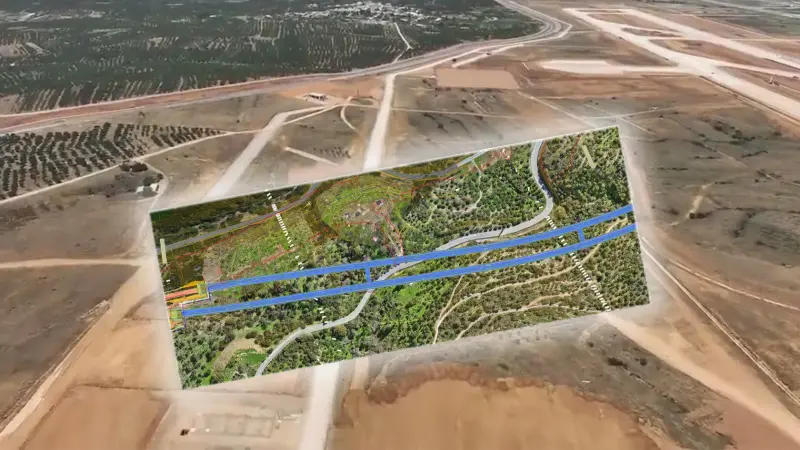
Work on the new road connection with VOAK is also at an advanced stage, having reached 85% completion, with the exception of the section where a 3-kilometre tunnel is planned.
The airport will be connected to VOAK via a closed motorway approximately 18 kilometres long. Plans also include a connecting road to the Arkalohori–Viannos provincial road, approximately 6 kilometres long, as well as a 1.5-kilometre Kastelli ring road.
Once construction is complete and operations begin, the new Heraklion Airport at Kastelli will become the country’s second-largest airport, after Athens International Airport “Eleftherios Venizelos”.
Its operation is expected to give new momentum to Crete’s tourism development, while DAIK management plans include increased connectivity with international destinations, upgraded passenger services and an extension of the tourism season. This also includes Mr Anastasiou’s meetings with representatives of hotels and airlines.
TERNA S.A., the construction arm of the GEK TERNA Group, is expected to complete and hand over the new international airport and its facilities to the airport management by next summer, when the exact date for the start of operations will also be determined. This date is not necessarily linked to the trial operation of the airport’s systems and the passenger-flow trials that will follow.
Cretalive
Cretalive
Papoura Hill
The final date will depend to a large extent on the delivery and installation of critical air navigation systems, namely the air navigation aids (radars), a process that falls within the responsibilities of the Civil Aviation Authority.
As Mr Anastasiou explained, decisions by the Council of State are still pending regarding appeals concerning the location of the new radars on Papoura Hill. This location had been selected by the Civil Aviation Authority as the most suitable for flight safety reasons, as serious problems of limited visibility were identified at alternative locations.
Despite the recent approval of the location by the Central Archaeological Council, reactions followed and appeals were filed, with the final court decisions expected in the coming period.
Finally, it is worth noting that more than 1,100 people are currently working on the project, while more than 500 machines are in operation. The investment in Heraklion International Airport of Crete amounts to €625 million, while, as Mr Athanasiou pointed out, the total investment could exceed €1.5 billion when investments for the development of the commercial zone are also taken into account.
Overall, 10 buildings and facilities are being developed.
The project as a whole includes:
- Fire Service and Police facilities
- the airport maintenance building
- ground handling facilities
- the electricity distribution building
- the 150 kV substation
- water and fuel tanks
- an underground water network
- the biological treatment facility, which will also serve neighbouring settlements
- fuel storage and refuelling facilities through an underground hydrant system
- the waste collection unit
- parking and service areas for 1,378 vehicles, 206 motorcycles, 168 taxis and 96 buses
- eight connecting taxiways
- two additional connections with the military airport
- an aircraft parking area capable of serving up to 40 Category C aircraft, with 16 spaces for smaller private aircraft and 3 spaces for helicopters
- upgrades to the airport’s external perimeter network, with works extending over a total length of 20 kilometres.


Related news